

Ray Palmer brought science fiction to central Wisconsin
By Maggie Thompson and Brent Frankenhoff
The opening of Wikipedia’s entry on Raymond Alfred Palmer (August 1, 1910-August 15, 1977) describes him as “an American author and magazine editor.” It adds that he was “influential in the first wave of science fiction fandom.” With his first story, “The Time Ray of Jandra,” published in the June 1930 issue of Wonder Stories, 2025 marks multiple anniversaries for the publishing pioneer.
How many folks in central Wisconsin knew him as more than the owner of Palmer Printing in Amherst? How many know he has a more than 13,000-word Wikipedia entry?
Born in Milwaukee, Palmer coped with a series of health challenges that he did not widely share with readers in the course of a career that made him nationally known. His work took him to Chicago, and, eventually, he brought his work to Amherst, moving to the community in late 1950.
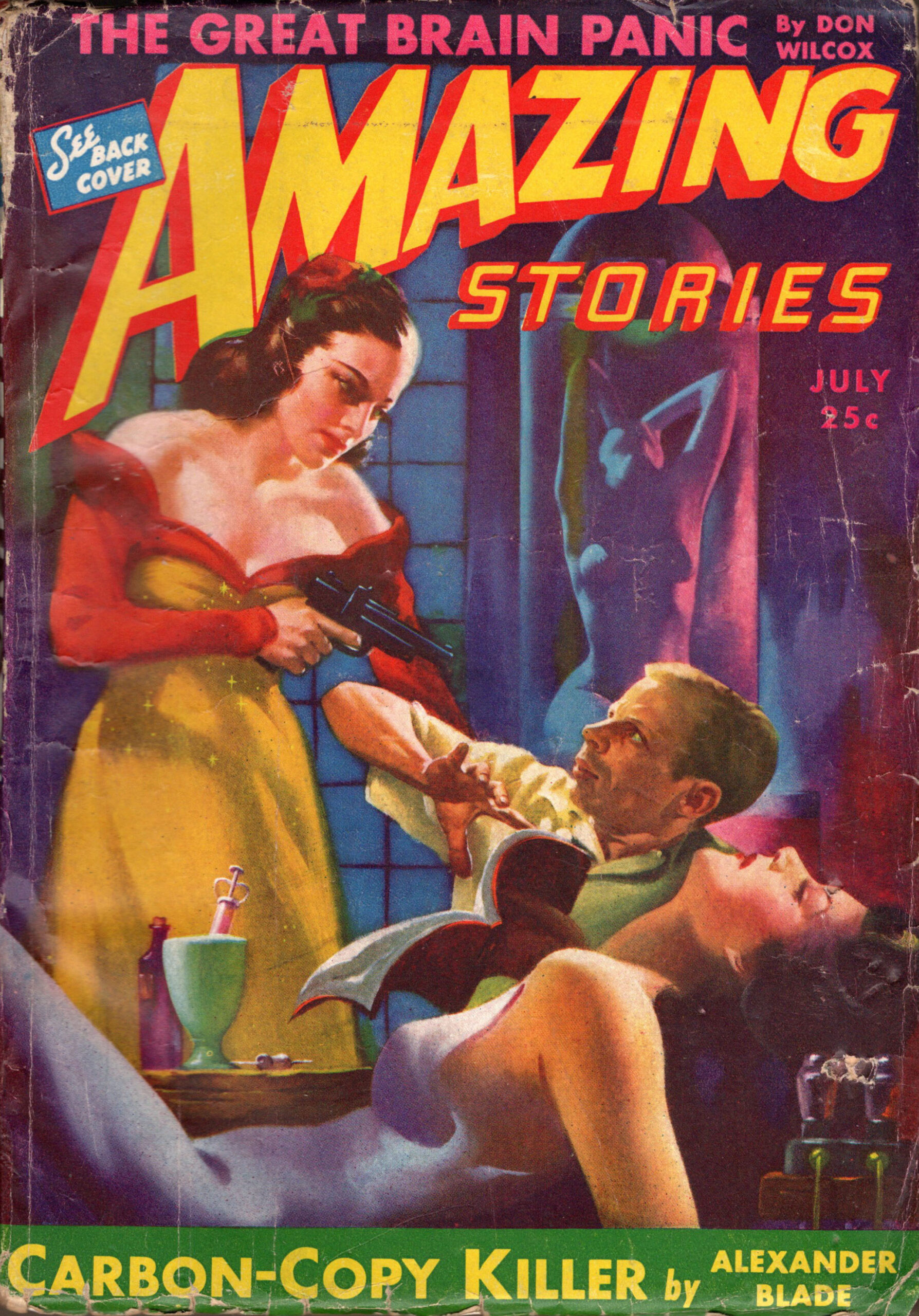
He co-created what is acknowledged to be the first science-fiction fan magazine, The Comet, in May 1930. The Ziff-Davis Publishing Company had been founded in Chicago in 1927 and in the 1930s hired Palmer (already an amateur writer-editor in touch with what fans enjoyed) to edit some of its magazines including the science-fiction-focused Amazing Stories and Fantastic Stories.
Eventually with the help of others, he became involved with his own publishing company, Clark Publishing Company, which released Fate magazine, with the lead article in its first issue (Spring 1948) being “The Truth about the Flying Saucers” by Kenneth Arnold. The Clark address was 1144 Ashland Avenue in the Chicago suburb of Evanston, and that was the address for the November 1949 first issue of Other Worlds (subtitled Science Stories) and the October 1950 first issue of Imagination (subtitled Stories of Science and Fantasy). In fact, the Clark Publishing address remained in Evanston when Palmer and his family moved to Amherst.
Prior to the move, Palmer had heavily promoted the flying saucer craze of the time, reporting on many UFO sightings across the country. In the early 1950s, he claimed to have seen a UFO near his Amherst home at the corner of County A and Clinton Road.
During his years in the Tomorrow River area, Palmer served on the Tomorrow River School District Board, the Portage County Fair Association, the local Lions Club, and more. In 1975, his company started the Tomorrow River Times as a replacement for the Amherst Advocate, which had ceased publication a few years earlier.
Palmer had several departments under the Palmer Publications umbrella. In addition to Palmer Publishing and Palmer Printing, there were also Amherst Press and the aforementioned Clark Publishing.
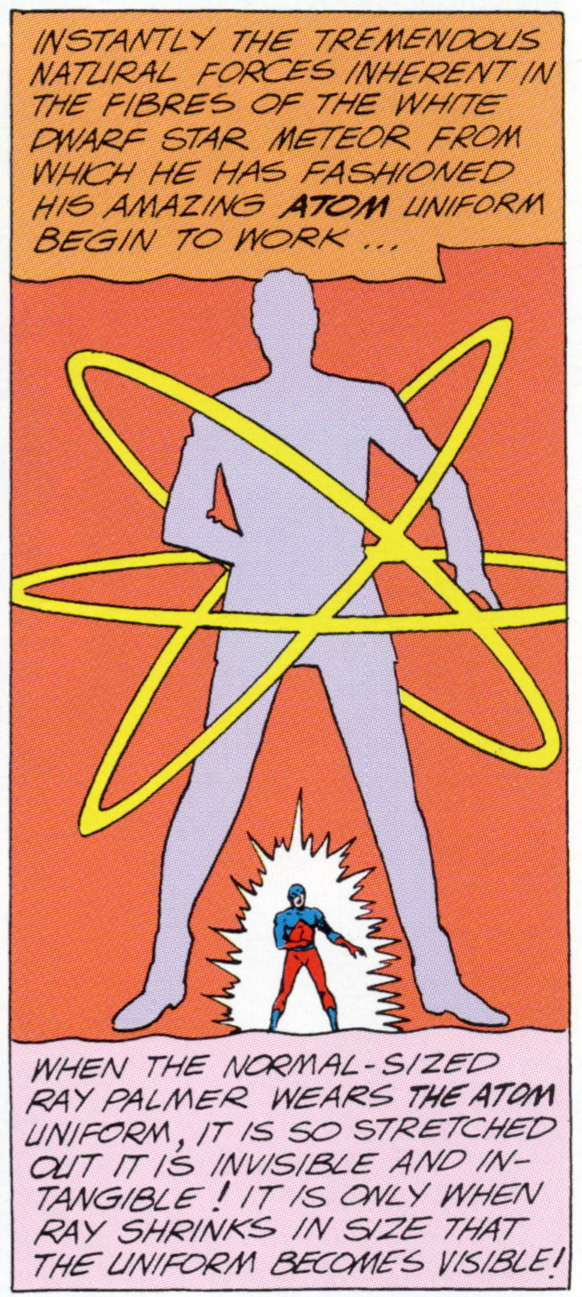
Palmer’s Clark Publishing work had put him in contact with such science-fiction fans as Julius Schwartz. When the diminutive hero The Atom was being revamped for a new group of readers in 1961, Schwartz, now an editor at DC Comics, called Palmer to ask if he could use Palmer’s name as the hero’s secret identity. That phone call inspired the hero’s trick of shrinking down and traveling over the phone lines. Most recently, the character, as portrayed by actor Brandon Routh, appeared on such CW Network super-hero shows as Arrow, The Flash, and Legends of Tomorrow.
Palmer’s son Raymond B. Palmer outlined many of the details of the family’s life in Amherst for a story by Brian Kurzynski in the March 12 issue of Portage County’s Point/Plover Metro Wire. He discussed the possibility of a documentary film about his father: appropriately, a hope for the future. In the meantime, there are people who worked for Palmer for years without being aware of his contributions to popular culture.
Richard Toftum began working for Palmer Publications in August 1963 in its North Main Street location, which had formerly been the Amherst Elementary School.
Toftum told the Spirit, “My first jobs involved trimming magazines — Flying Saucers, Space World, and others. I set up paper folding machines, collated magazines and book sections, operated printing presses, and also worked in the darkroom developing film for making the plates for the printing press.”
Over the course of his 15-year tenure, Toftum said that Palmer “was a good boss. He often checked in several times a day, either with a greeting or story of some sort, and to see how the job was coming along. Ray had an easy-going personality, never raised his voice towards anyone, and was well-liked by his employees.”
Rex Cass told the Spirit that he “was employed at Palmer Publications for about six months in 1983.”
Initially conducting research on some of the science-fiction publications, Cass added, “After a month, I reported some ‘findings,’ but by then, management decided they didn’t want this done. I spent another month learning to use the Varityper to create the Tomorrow River Times.”
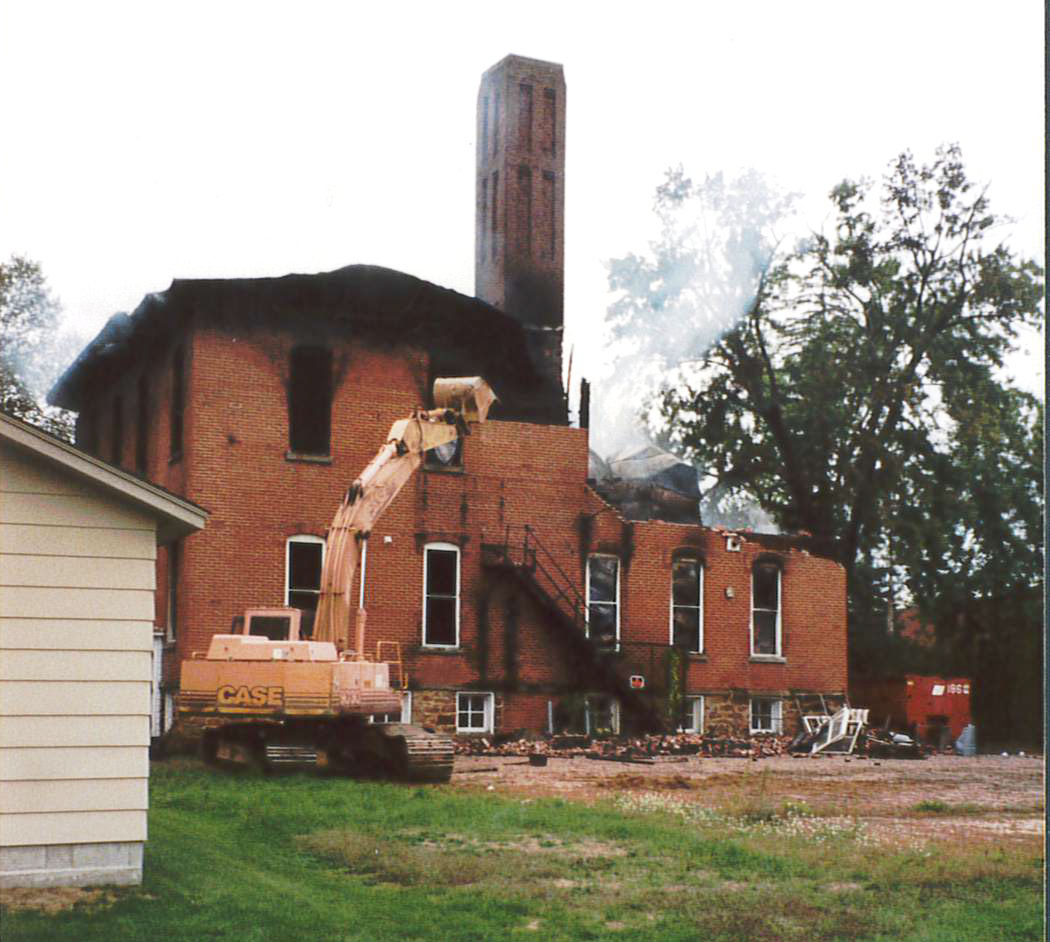
After Palmer Publications ceased operations, the North Main Street headquarters was in the process of being renovated when a fire broke out, caused by a cutting torch that was removing a fire escape from the rear of the building. Rick and Maureen Daniels bought the property in 2012, and their purchase included a group of custom-made windows that had been ordered for the building and couldn’t be returned to the manufacturer. Blenker Construction designed the Daniels’ home around those windows.
Rick Daniels told the Spirit, “We never met Ray or any of his family, but we still get occasional mail inquiring about Palmer Publications.”
Following his death in Florida in 1977, Palmer was buried in Amherst’s Greenwood Cemetery. His legacy lives on with the growth of pop culture fandom, which embraces much of what Palmer first printed in his myriad magazines.
H.W. McCauley painted Amazing Stories Editor Ray Palmer as the menaced target of the “Carbon-Copy Killer” for the cover of the July 1943 issue. © 1943 Ziff-Davis Publishing Company
Rick Daniels provided this photo of the destruction of the former Palmer Publications building after a fire destroyed much of the structure which had been the Amherst Elementary School before Palmer’s purchase. The Daniels’ home, which utilized windows ordered for the Palmer refurbishment, now sits on the site.
When DC Comics relaunched The Atom in 1961, editor Julius Schwartz asked Palmer’s permission to use his name as the hero’s secret identity. Panel from The Atom #2 © 1962 National Periodical Publications (DC Comics).